
The Story I’m Not Ready to Tell (Yet)
Sometimes we don’t avoid the story because we don’t know it; we avoid it because it isn’t safe to say yet.
Recently, I had the honor of appearing on Lisa Cooper-Ellison’s podcast, Writing Your Resilience, in an Ask Me Anything segment. One awareness from that conversation has stayed with me: sometimes we aren’t avoiding the core of our story because we don’t know it. We’re avoiding it because it’s too vulnerable to say out loud….yet.
This piece grew out of that conversation.
If you want to hear where it first surfaced, you can listen to Silenced No More on the Writing Your Resilience Podcast (episode 118).
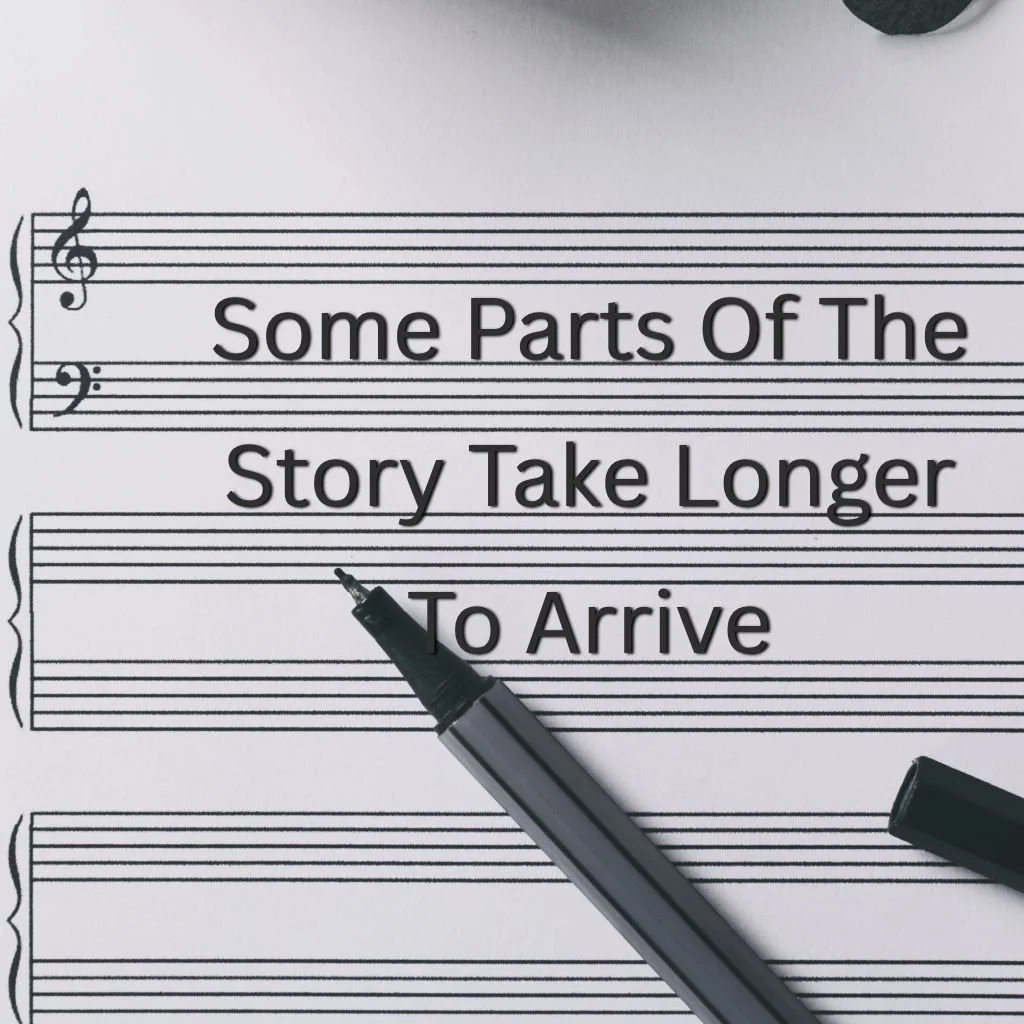
Here’s something nobody tells you in the memoir writing instruction books— you can spend years writing around the thing you most need to say and produce genuinely beautiful work in the process. It’s like writing every orchestral part except the melody. The clarinets are exquisite, the French horns are doing something transcendent, and the main line, the exposed one with nowhere to hide, is completely blank.
That’s not writer’s block. That’s something else entirely.
In music, every instrument in the orchestra gets to exist in relationship to something else. The supporting lines respond, blend, and hold things together. They are essential, and they are also, crucially, never alone. The melody doesn’t get that luxury. The melody stands completely exposed. When the melody surfaces, there is nowhere to hide.
Which is why, if you’re writing toward something hard, you might spend a long time playing the bass line while the melody stays just out of reach. You might drift over to the oboe or linger with the percussion because at least you know how those go.
I know this because I am in this phase.
I have written essays about objects and houses and names and ghosts and the particular way music sounds when your nervous system is trying to keep you alive. These are good essays. Some of them I’m genuinely proud of. Every single one of them exists, at least in part, because the melody, the story the whole collection is actually built around, is still sitting in the score as one long, mocking row of rests. Staring (very rudely) at me.
Why We Write Around the Stories That Matter Most
The story at the center of your hardest writing doesn’t just ask whether you’re ready. It asks whether it’s safe to be said out loud. Those are very different questions, and one of them is significantly more terrifying. Your nervous system, which has strong opinions about all of this and cares nothing about your publishing timeline, would like you to go back to the bass line.
So you do.
You write it meticulously and slowly. Without fully realizing it, you are building the orchestra that will eventually be able to hold the melody when you decide it’s ready to be released.
The part nobody talks about is that this circling is not a detour. It is the approach. Ever flown into Atlanta? Your plane wasn’t lost. It wasn’t broken. It was 16th in line for clearance to land. The circling was always the plan.
Every essay you write around the melody of your story teaches you something about its shape. You learn what it’s adjacent to, what it sits on top of, what’s underneath, and what other stories it’s tangled up with. You learn which parts you can touch and which parts still make your body tremble.
You are not avoiding the melody. You are figuring out what key it’s in.
I think I know where the melody begins. Maybe not the whole thing, but at least the first few notes.
It shows up in fragments. In the stories I almost tell and then pivot away from, and in the sentences I soften right before they get too honest.
I can hear it now, which feels new. That’s enough for this moment. I don’t have to write it yet. I just have to recognize it when it passes through me.
This piece began in a conversation I had with Lisa Cooper-Ellison on her podcast Writing Your Resilience.
If you want to hear where this idea first surfaced, you can listen here:
What story keeps showing up at the edges of your writing? I'd love to hear what you're discovering as you write toward it.
Keeping it real and creatively visible,
🍫 Meagan




Father's Day isn't simple for everyone. This is a survival guide — funny, a little defiant, and honest about what the holiday actually feels like when your father isn't who he should have been.